


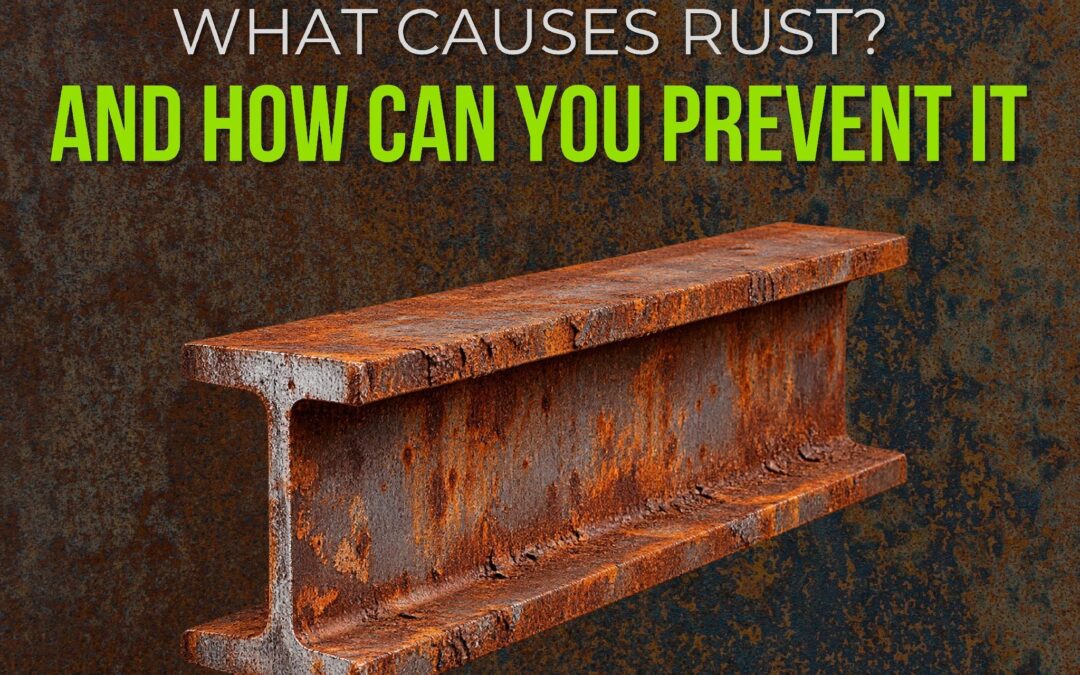
A newly built steel gate, handrail or frame can look excellent on installation. Six months later, a few orange marks appear around a joint or along a scratched edge. Is that normal? Can it be prevented? And does every steel product need the same protection?
Rust is common, but it is not inevitable in every setting. Knowing what causes corrosion helps homeowners, builders and fabricators choose suitable materials, protect finished projects and spot small problems before they become expensive repairs.
Illustration: Different surface conditions and exposure can influence corrosion.
What actually makes steel rust?
Rust develops when iron in steel reacts with oxygen in the presence of water. Rain is an obvious source of moisture, but condensation, washing, damp soil and humid air also contribute. When moisture and oxygen reach exposed steel, electrochemical reactions form iron oxides and hydroxides, commonly called rust.
This is why corrosion often first appears around scratches, welds, joints, cut edges and areas where moisture remains trapped. Salts and certain contaminants can make the conditions more aggressive. Coastal locations, for example, generally require more careful material and coating choices than dry, sheltered interiors.
A little surface discolouration is different from significant metal loss. Over time, unchecked corrosion can reduce section thickness and affect how a component performs. If a structural or load-bearing item shows substantial corrosion, ask a suitably qualified professional to assess it rather than judging strength from appearance alone.
Does every type of steel rust the same way?
Untreated mild steel
Mild steel is widely used for frames, gates, brackets and general fabrication. It is versatile and easy to work with, but untreated surfaces exposed to moisture generally develop rust. For outdoor applications, an appropriate protective finish is normally part of the specification, not an optional extra.
Painted or coated steel
A suitable coating helps separate steel from moisture and oxygen. However, the finish only performs as intended when the surface is properly prepared and the coating system suits the environment. Loose scale, grease, moisture and existing rust can interfere with adhesion. Scratches and damaged edges should be repaired according to the coating manufacturer’s instructions.
Galvanised steel
Galvanising adds a zinc coating to steel. Zinc acts as a barrier and can also provide sacrificial protection at small exposed areas. That is why galvanised products are often considered for outdoor applications. Their service life still depends on coating thickness, local conditions, handling and any fabrication after galvanising. Cutting or welding may damage the zinc layer and require suitable repair.
Four practical habits that help protect steel
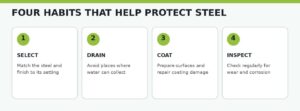
A simple approach to planning, protecting and maintaining steel products.
1. Match the material and finish to the environment
Start with where the steel will be used. Indoor shelving and outdoor fencing have different exposure conditions. Consider rainfall, standing water, humidity, chemical contact and whether the steel will be enclosed or easy to inspect. Ask the supplier about suitable steel and finishes for the intended application.
2. Design so water can drain
Water collecting inside hollow sections, on horizontal ledges or around poorly sealed connections can increase the risk of corrosion. Drainage and ventilation should be considered during design and fabrication, especially for outdoor gates, frames and structures. A coating alone cannot compensate for a detail that constantly traps water.
3. Prepare and protect the surface correctly
Before applying a coating, remove contamination and prepare the surface to the relevant product specification. Use compatible primers and topcoats as a system. Pay particular attention to welds, edges and repaired areas. If you are unsure what the manufacturer requires, seek advice rather than applying another layer over a failing finish.
4. Inspect and maintain before damage spreads
A quick periodic inspection can reveal scratches, chips, flaking paint and rust staining. Clean surfaces using methods suitable for the coating, repair small defects promptly and ensure drainage routes stay clear. High-exposure sites may need more frequent attention.
ASAP Steel & Pipe | www.asapsteel.co.za | 011 907 6620 ASAP STEEL & PIPE | NOVEMBER 2026 KNOWLEDGE HUB
Five mistakes that can shorten a steel project’s life
● Leaving new mild steel outdoors for extended periods without protection.
● Painting directly over loose rust or a dirty surface.
● Ignoring cut edges, welds and other areas where the original finish has been disturbed.
● Allowing soil, leaves or debris to trap water against steel components.
● Assuming galvanised steel can never corrode or need maintenance.
What should you check before buying steel?
Think beyond the profile and quantity. Confirm whether the project is indoors or outdoors, whether you need a specified coating or galvanised finish, and whether any cutting, drilling or welding will happen after purchase. The right answer for a decorative garden feature may not suit a structural frame or coastal installation.
ASAP Steel & Pipe | www.asapsteel.co.za | 011 907 6620 ASAP STEEL & PIPE | NOVEMBER 2026 KNOWLEDGE HUB
It also helps to ask about dimensions, tolerances, finish compatibility and how the material should be stored until fabrication. Keeping unused steel properly supported and protected from unnecessary moisture can reduce preventable damage before the job even starts.
The bottom line
Rust prevention begins long before the first brushstroke of paint. Choosing suitable steel, planning the details, applying the right finish and carrying out basic maintenance are all part of making a project last. A little attention at the beginning often saves considerable work later.
Planning your next project?
Whether you are planning a steel gate, fabrication job, outdoor frame or repair, ASAP Steel & Pipe can help you explore available steel profiles and product options.
Speak to the ASAP Steel & Pipe team about the materials and product options suitable for your project. Visit www.asapsteel.co.za or phone 011 907 6620.
ASAP Steel & Pipe | www.asapsteel.co.za | 011 907 6620