


Choosing the right steel product is not simply a matter of ordering a convenient length or accepting the lowest price. The profile, dimensions, wall thickness and grade all influence how the material will perform once it is cut, welded, drilled and installed.
A square tube may be ideal for a gate frame but unsuitable for a base plate. Angle iron can reinforce a corner efficiently, while flat bar may be better for brackets, straps or small fabricated components. Steel plate is generally selected when a project requires a broader and heavier solid section.
Understanding these basic differences can help builders, fabricators, contractors and DIY customers across Gauteng reduce waste, simplify fabrication and avoid purchasing material that is poorly suited to the job.
This guide explains the practical differences between steel tubing, angle iron, flat bar and steel plate. It provides general product guidance only; load-bearing and safety-critical structures should be designed or approved by a suitably qualified professional.
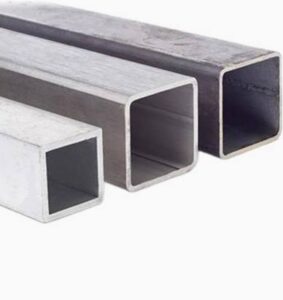
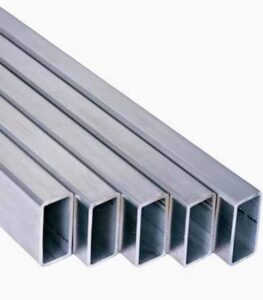
Steel Tubing: Practical Strength and Versatility
Steel tubing is one of the most versatile products used in fabrication, construction, maintenance and security projects. It is commonly available in square, rectangular and round profiles.
Because tubing is hollow and enclosed, it can provide useful rigidity without the weight of a solid steel section of the same external dimensions. The closed profile also gives tubing a neat appearance and makes it suitable for frames that must resist forces from more than one direction.
ASAP Steel & Pipe supplies steel tubing in a range of profiles and sizes for gates, fencing, carports, furniture, shelving and general fabrication projects.
Typical Uses for Steel Tubing
- Gate and fencing frames: Square and rectangular tubing provide straight edges that are convenient for alignment, welding and fitting cladding, mesh or palisade components.
- Carports and canopies: Tubing is widely used for posts, rafters and supporting frames, subject to the correct structural design and material specification.
- Furniture and display frames: Its clean lines make tubing suitable for tables, benches, shelving, shopfitting and decorative fabrication.
- Balustrades and handrails: Round or square tubing may be selected according to the required appearance, grip and connection method.
- General fabrication: Tubing is frequently used for equipment stands, trailer components, storage systems and light structural frames.
Understanding Tubing Measurements
When ordering square or rectangular tubing, confirm the outside dimensions, wall thickness, required length and quantity. A specification such as 50 x 50 x 2 mm normally refers to a square tube measuring 50 mm by 50 mm externally, with a wall thickness of 2 mm.
Do not choose tubing based on outside dimensions alone. Two tubes may appear similar but perform differently because of their wall thickness, steel grade, span, support points and connection method.
A thicker wall does not automatically make a section suitable for every load-bearing application. Structural members must be selected according to the actual loads and design requirements.
Angle Iron: Support Where Two Sides Meet
Angle iron has an L-shaped profile, normally formed by two legs positioned at approximately 90 degrees to each other. Its shape makes it useful for reinforcing corners, supporting edges and creating frames or brackets.
The open profile allows easy access for drilling, bolting and welding. It can also sit neatly against another flat surface, which is useful when attaching shelves, panels or fabricated components.
ASAP Steel & Pipe supplies angle iron for construction, maintenance, shelving, gate fabrication and general engineering work.
Common Applications for Angle Iron
- Shelving and rack supports: The L-shaped profile can support a shelf edge while providing a surface for bolting or welding.
- Frames and brackets: Angle iron is commonly used for equipment stands, small frames, corner brackets and support structures.
- Edging and reinforcement: It can protect or strengthen corners and edges on platforms, trailers and fabricated assemblies.
- Construction and repair work: Angle iron is useful for general maintenance, reinforcement and replacement components where an open profile is practical.
Equal and Unequal Angles
Equal angle has two legs of the same width. Unequal angle has one leg that is wider than the other. The correct option depends on the surface being supported, the connection points and the direction of the load.
Angle iron behaves differently from a closed tube when exposed to twisting and bending forces. This is why the intended application matters more than simply choosing the profile that looks easiest to use.
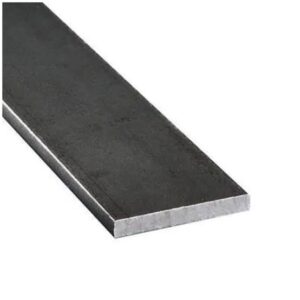
Flat Bar: Simple, Adaptable and Easy to Fabricate
Flat bar is a solid rectangular strip of steel supplied in different widths and thicknesses. Its simple shape makes it practical for components that must sit flush against another surface or be drilled, cut, bent or welded into a fabricated assembly.
Flat bar is widely used in gate fabrication, repairs, brackets, straps and decorative steelwork. It can also be combined with tubing, angle iron and plate within the same project.
Typical Uses for Flat Bar
- Gate and fencing components: Flat bar can be used for straps, tabs, supports, guides, hinges and latch components.
- Brackets and reinforcing strips: Its flat surface makes it suitable for joining, strengthening or finishing fabricated sections.
- General repairs: Flat bar can be cut and drilled to replace worn or damaged small components, provided the size and grade are appropriate.
- Decorative fabrication: It can be shaped or combined with other profiles for screens, furniture and ornamental steelwork.
- Mounting and support pieces: Narrow flat components can be manufactured without cutting every part from a full sheet or plate.
Flat Bar Versus Steel Plate
Flat bar and steel plate are both flat, solid products, but they are supplied in different forms. Flat bar is generally supplied as a narrower strip, while steel plate is available in substantially wider sections or full sheets.
Flat bar is often more convenient for straps, braces and narrow components. Plate is normally more practical when the finished part requires greater width, a larger surface area or a custom shape cut from a sheet.
Steel Plate: Built for Larger and Heavier Components
Steel plate is generally selected when a project requires a broad, solid and heavier-duty section. It is commonly used for bases, mounting points, machine parts, structural connections and industrial fabrication.
ASAP Steel & Pipe supplies sheet and plate and can assist with selected cutting and preparation services, helping customers order material closer to the required finished size.
Common Applications for Steel Plate
- Base and mounting plates: Plate can spread loads over a larger surface and provide a secure area for bolts, welds or equipment mounting.
- Structural connection plates: Correctly specified plates are used to connect steel members and reinforce joints in engineered structures.
- Machine and equipment components: Plate can be cut into guards, brackets, supports, flanges and custom industrial parts.
- Vehicle and trailer fabrication: It may be used for mounting points, reinforcing components and other heavy-duty fabricated sections.
- Platforms and industrial projects: Wider plate sections are useful where a solid working, supporting or protective surface is required.
What to Confirm When Ordering Steel Plate
Confirm the required thickness, width, length, quantity, material grade and surface condition. Also identify any holes, slots, cut-outs, shaped edges or bends required before requesting a quotation.
Steel plate is heavy. Its size and thickness affect transportation, lifting, cutting and installation. Having the material cut or prepared before delivery can reduce handling, waste and fabrication time on site.
In everyday steel-trade terminology, sheet usually refers to thinner material and plate to thicker material, but the exact description may vary by specification and supplier. Always order using the actual dimensions and grade required.
Quick Comparison: Which Steel Product Should You Use?
- Choose steel tubing when you need a hollow, neat and versatile profile for gates, frames, furniture, shelving, balustrades or light structures.
- Choose angle iron when you need corner reinforcement, an open support profile, edging, brackets or shelving supports.
- Choose flat bar when you need narrow solid strips for straps, tabs, hinges, reinforcing pieces, brackets or decorative fabrication.
- Choose steel plate when you need a broad, solid and heavier component such as a base plate, machine part, mounting plate or structural connection.
These are practical guidelines rather than engineering specifications. The correct material will still depend on the load, span, environment, steel grade, connection method and overall design.
Questions to Answer Before You Order
- What is being built? Describe the finished item and how it will be used rather than ordering only by a product name.
- Will it carry a load? Identify whether the component is decorative, supporting equipment or forming part of a load-bearing structure.
- How will it be joined? Consider whether the material will be welded, bolted, riveted, bent or fitted into another component.
- Where will it be installed? Indoor, outdoor, coastal, wet and corrosive environments may require different finishes, coatings or maintenance plans.
- What preparation is required? A clear cutting list or drawing should include sizes, quantities, lengths, holes, angles, notches, cut-outs and bends.
Do Not Choose Steel by Price Alone
The lowest material price does not always produce the lowest overall project cost. Steel that is too light may flex, distort or require additional reinforcement. Material that is unnecessarily heavy may increase cutting, welding, transport and installation costs.
The correct profile can also reduce fabrication work. For example, using suitable tubing for a frame may require fewer reinforcing pieces than attempting to build the same frame from an unsuitable open section.
Save With Sorted B-Grade Steel Where Appropriate
For certain non-critical projects, sorted B-grade steel can provide meaningful savings. It may be suitable for items such as workshop tables, farm repairs, supports, shelving, barriers and general fabrication where cosmetic imperfections or non-standard lengths do not affect the intended use.
B-grade steel should not be treated as a universal substitute for new prime material. Customers should inspect the available stock, confirm the dimensions and discuss whether it is appropriate for the specific application. Availability changes as stock is received and sorted.
ASAP Steel & Pipe is known for its sorted B-grade offering, giving cost-conscious customers another option when the project and specification allow it.
Save Time With In-House Steel Services
Buying the correct material is only the first step. Preparing it accurately can make fabrication faster, reduce waste and limit the amount of cutting or reworking required on site.
ASAP Steel & Pipe offers guillotining, laser cutting, plasma cutting, notching and plate bending. The appropriate process will depend on the material, thickness, required accuracy and finished shape.
Provide a complete cutting list or technical drawing wherever possible. Include the product type, dimensions, wall thickness, lengths, quantities, hole or cut-out positions, special angles and bend requirements.
Why Source Steel From ASAP Steel & Pipe?
- A broad steel range: Customers can source tubing, angle iron, flat bar, sheet, plate and related products for fabrication, construction, maintenance and security projects.
- Sorted B-grade options: Cost-saving B-grade steel may be available for suitable non-critical applications, subject to stock and inspection.
- In-house preparation services: Guillotining, laser cutting, plasma cutting, notching and plate bending can help customers order material closer to the required finished specification.
- Practical project assistance: Customers can bring measurements, a drawing, photographs or a physical sample when they are unsure of the correct trade terminology.
- Convenient Gauteng delivery: Delivery is available within the relevant service area, subject to the order, location and delivery requirements.
Bring Us the Idea
You do not always need to know the exact steel term before contacting ASAP Steel & Pipe. Bring the idea, photograph, drawing, measurements or physical sample to the team.
ASAP can help you identify the relevant steel profile, discuss suitable sizes and prepare a quotation for the material and available cutting or profiling services.
Call 011 907 6620, email info@albertonsteel.co.za or visit www.asapsteel.co.za to request a quotation for your next steel project.
| CONTACT ASAP STEEL & PIPE Tel: 011 907 6620 | Email: info@albertonsteel.co.za | Website: www.asapsteel.co.za |